The Pixel 10 Pro XL Detail Review
Another year, another Pixel, and this time, the feeling of “been there, done that” is strong. We’ve spent time with the new Pixel 10 Pro XL, and it’s hard to shake the feeling that we’ve seen this phone before.
That’s because, essentially, we have. The Pixel 10 Pro XL is a refresh of the Pixel 9 Pro XL, featuring a more powerful processor but an almost identical design. This practice of minimal design changes between generations isn’t new in the industry, and it seems Google has now adopted it as well.

Key Specifications:
- Body: 162.8×76.6×8.5mm, 232g; Gorilla Glass Victus 2 on front and back, aluminum frame; IP68 water and dust resistance.
- Display: 6.80″ LTPO OLED, 1-120Hz, 3300 nits peak brightness, 1344x2992px resolution, 486ppi.
- Processor: Google Tensor G5 (3 nm).
- Memory: 16GB RAM with 256GB, 512GB, or 1TB storage options.
- Software: Android 16 with Material 3 Expressive UI, seven years of major OS and security updates.
- Cameras:
- Rear: 50MP main, 48MP 5x telephoto (5x optical zoom), 48MP ultrawide.
- Front: 42MP ultrawide with PDAF.
- Video: 8K@30fps (upscaled), 4K@24/30/60fps.
- Battery: 5200mAh; 45W wired charging, 25W Qi2 wireless charging.
- Other: Under-display ultrasonic fingerprint reader, stereo speakers, UWB, Satellite SOS.
It would be easy to simply say the Pixel 10 Pro XL is just a faster Pixel 9 Pro XL and end the review there. But for those looking for a more in-depth look, let’s explore what’s new and what’s not, starting with the design.
Design and Ergonomics
The Pixel 10 Pro XL’s design is largely unchanged from its predecessor. It maintains the same fundamental shape with flat glass panels and a flat metal frame. The dimensions are identical.
However, it’s about 11 grams heavier, a noticeable difference on an already heavy phone. This added weight, combined with its large size, makes the device feel bulky and a bit awkward to handle. The stiff volume and power buttons are still present, and their unconventional placement continues to be an ergonomic annoyance for anyone switching from another Android device.
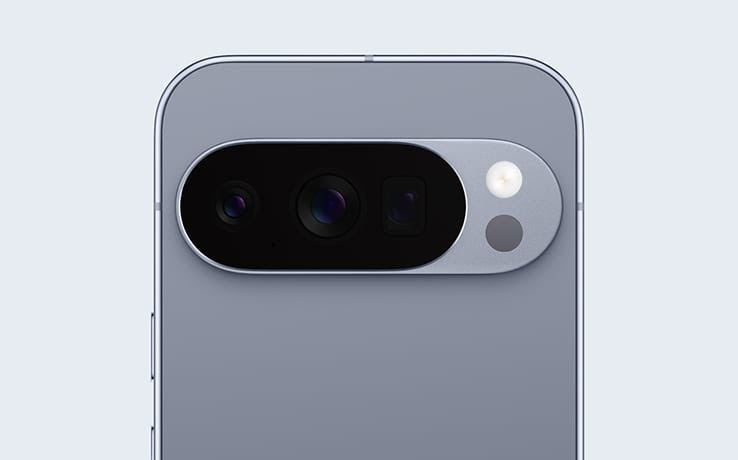
The rear camera bar is slightly larger this year, though you’d need a side-by-side comparison to notice. A more practical change is the repositioned bottom speaker. The Pixel 9 Pro XL’s speaker was on the left of the USB port, often getting blocked. The new model moves the SIM tray to the top and places the speaker on the right, where it’s much less likely to be covered when you’re holding the phone.
New colors include Obsidian, Jade, and a bluish-gray Moonstone. While the design is still attractive—with its polished metal frame and distinct camera bar—the ergonomic issues remain. The design simply isn’t fresh enough to justify these compromises for a second consecutive year.
Display and User Experience
The display is a major highlight, a beautiful 6.8-inch LTPO OLED panel with a resolution of 2992 x 1344. It’s a flat screen, avoiding the glare and distortion issues of curved displays. With excellent colors and high resolution, it also gets brighter than the previous model, reaching up to 2200 nits. This increased brightness is a minor, but welcome, upgrade.
The 1-120Hz variable refresh rate is a standout feature. It dynamically adjusts to match on-screen content, from dropping to 1Hz on a static screen to matching the framerate of a video or game. This not only ensures smooth visuals but also conserves battery.
The phone supports HDR10 and HDR10+, making the lack of Dolby Vision less of an issue. The in-display ultrasonic fingerprint sensor is fast and reliable, even with a wet finger. The phone’s haptics are also excellent, providing firm, responsive feedback. Overall, the display continues to be a strong point for the Pixel.
Battery and Charging
With a 5200mAh battery, the Pixel 10 Pro XL shows only a modest improvement over its predecessor. This capacity is disappointing given the phone’s size and price, especially when many competitors offer larger batteries.
Wired charging has been bumped up to 45W, but our initial tests showed slower charging speeds than the previous model, which is perplexing. The reason for this is unclear and may require further testing with different chargers.
The most significant charging upgrade is the new 25W Qi2 wireless charging. This standard includes a magnetic attachment, which Google brands as Pixelsnap. It functions much like Apple’s MagSafe, allowing for magnetic chargers and accessories. It’s backward compatible with MagSafe accessories, though you’ll be limited to 15W speeds. We couldn’t test this feature, but it’s an exciting addition for future accessory options.
Software and Performance
The Pixel 10 Pro XL ships with Android 16 and introduces the new Material 3 Expressive UI. This is a major visual update that brings a more dynamic, lively interface with springy animations and reactive elements. While it’s a refreshing change from the previous, more static design, some of the stylistic choices might not appeal to everyone.
As with all recent Pixels, this one is guaranteed seven years of software and security updates, a fantastic commitment.
New AI-powered features include Magic Cue, which is supposed to provide contextual information from your apps, and Camera Coach, which uses AI to guide you in framing a picture. We found Magic Cue to be buggy and non-functional during our testing, a common issue with new Pixel software. While the user interface itself is clean and well-designed, software bugs were a recurring problem.
The phone is powered by the new Google Tensor G5 chip. Google claims a significant performance boost—34% faster CPU and 60% faster TPU. Benchmarks confirm a 34% multi-core improvement, but single-core performance is only up by about 16%. In terms of graphics, the G5 is still a generation or two behind the competition from Qualcomm.
While the phone feels fast and responsive in daily use, it struggles with graphically demanding games like Genshin Impact, dropping frames at max settings. A major concern is the chip’s long-term performance, as the Tensor series has not historically aged as well as its rivals. Thermal throttling was also an issue in our stress tests, indicating a potential performance drop during sustained heavy use.
Camera System
The camera hardware is identical to the Pixel 9 Pro XL: a 50MP main, a 48MP ultrawide, a 48MP 5x telephoto, and a 42MP front camera. Google suggests the new Tensor G5’s ISP will improve image quality.
The camera app UI is quirky and non-standard. The shutter button is placed high up, which can be annoying and counterintuitive for those accustomed to other Android phones.
Image quality from the main camera is excellent, with impressive detail, color accuracy, and dynamic range. The 5x telephoto lens also captures good detail, but it has an oddly long minimum focusing distance that can be frustrating, especially in the auto-switching mode. The ultrawide camera performs well, capturing detailed images with minimal noise. It also doubles as a macro lens, but the wide perspective and distortion make it less than ideal for close-up shots.
The Pixel 10 Pro XL can create 100x zoom images using AI. These are more like “digital paintings” than true photographs, as the AI fabricates details. The phone saves both the original and the AI-enhanced versions, allowing you to see the difference.
Video quality is a mixed bag. The main camera’s video has a surprising amount of shake, while the ultrawide’s is incredibly stable. The phone can record in 4K at 60fps across all four cameras, but 10-bit HDR is limited to 30fps. The “8K” option is not native; it requires a cloud-based upscaling process, which feels like a gimmick.
Final Thoughts
The Pixel 10 Pro XL is a faster and more refined version of its predecessor. The improvements are subtle but appreciated, including the more powerful Tensor G5 chip, the magnetic Qi2 wireless charging, and the new UI.
The phone is a good device overall. Its display is superb, the software is clean (despite the bugs), and the cameras produce great photos. However, it’s held back by some significant downsides: it’s heavy and unwieldy, the G5 chip lags behind the competition, and the battery and charging speeds are underwhelming. The software’s bugs and Google’s unconventional design choices also make for a less-than-perfect experience.
At its premium price point, “good” isn’t enough. The Pixel 10 Pro XL faces stiff competition from phones that offer better performance, battery life, and overall polish. It’s a solid phone, but it needs to be more than that to truly stand out.